How Businesses Can Reduce Obvious Intoxication and Increase Cut-Offs, Part 1
(Insight in the “Drunk, Drunker, and High-Risk Drunkenness” series)
Recap of Prior Insight
- Customers are overserved alcohol and rarely cut off because:
- The ABC doesn’t enforce the law against serving an obviously intoxicated person (§25602a Business & Professions Code).
- Staff who might enforce a cut-off policy are unaware of the rise in insurance costs due to claims involving drunk customers.
- Staff aren’t exposed to the research that quantifies customer harm at higher BAC levels.
- Business owners are unaware of many practices that can reduce high-risk intoxication inside their establishments.
- The siloing of information between the alcohol research community and the hospitality industry harms all stakeholders.
- The broad sharing of information from research studies would provide business owners and managers with the knowledge, tools, and motivation to serve alcohol more responsibly.
Short on time? Skip to the recap below!
How you can help businesses replace ineffective legacy practices with new, best practices
It’s no surprise. The overconsumption of alcohol and related problems are the norm at most nightlife venues. Clearly, the practices of those alcohol businesses aren’t working.
You can motivate businesses to adopt new, responsible business practices. Ones that reduce the number of customers who become obviously intoxicated and that increase timely cut-offs.
Business owners and managers need to understand:
- How the new approach benefits the business.
- What the new approach looks like in practice.
Giving the Best Practices for Nightlife Establishments booklet to your city’s alcohol businesses provides them with the motivation and essential tools to improve their operation. The 42-page booklet includes, for example :
- Six helpful pages on the risks of overservice— how drunk customers endanger the ABC license, harm your profits, and increase liability risks.
- A two-page addendum, Insurance & Lawsuit Essentials for Hospitality Staff
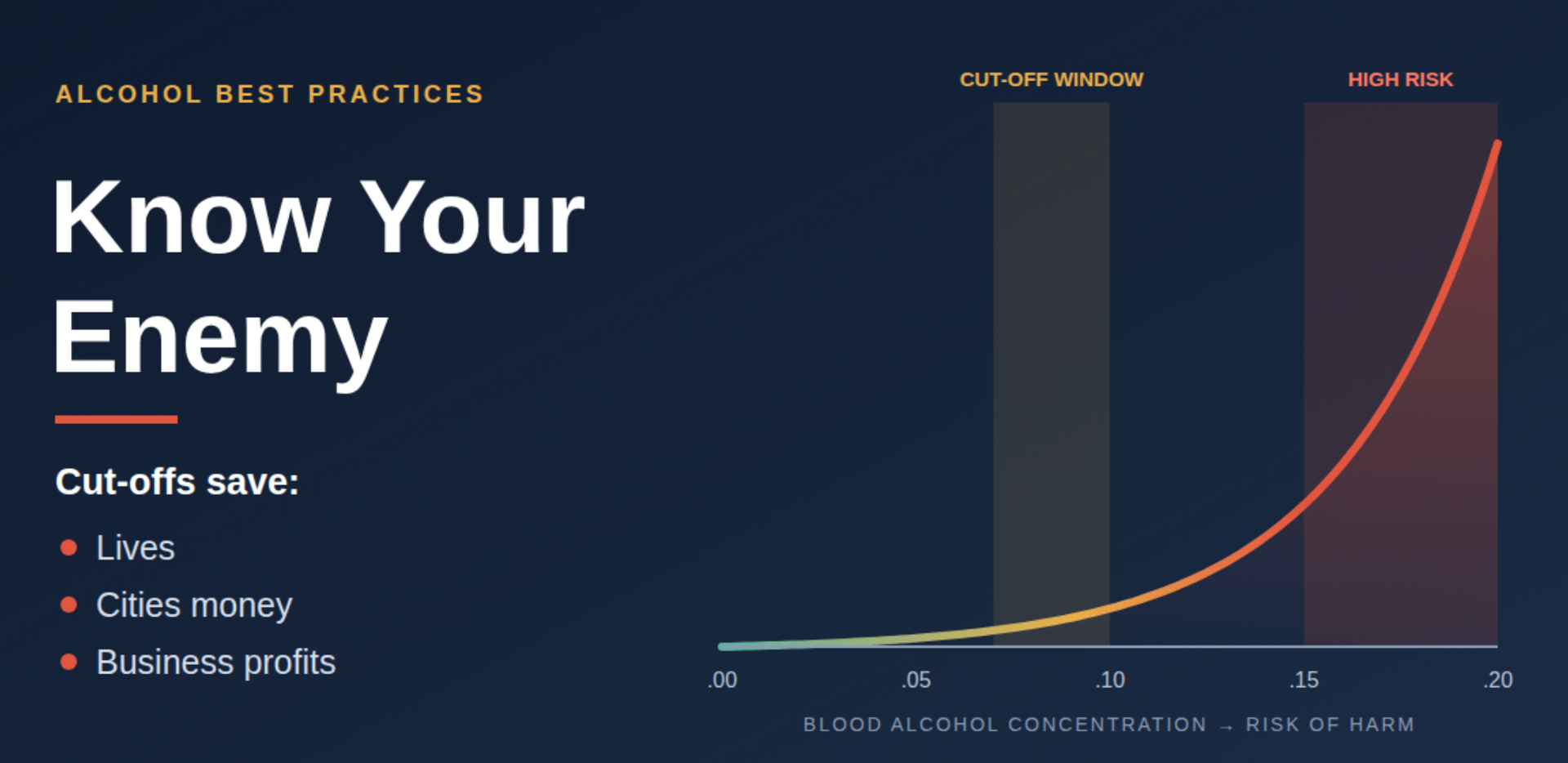
- One crucial page with a “relative crash risk” chart and seven reasons why cutting off customers benefits the business.
- One eye-opening page on the financial impact of reducing overpouring, a common but costly industry issue that reduces profits, tips, and increases risk to the drinker.
- Two pages that share our ten best practices to reduce intoxication and properly handle drunks.
Below, from the booklet, are the ten best practices to prevent and deal with customer intoxication:
1. Choose effective responsible beverage service (RBS) training
Select a course that goes beyond laws and penalties. The best training connects intoxication to real business outcomes. This includes increased insurance claims, higher liability exposure, and reduced profits. It also provides actionable methods to prevent overservice. Very few courses include this vital content.
2. Reinforce expectations during hiring and onboarding
- Discuss the importance of never serving obviously intoxicated customers. Do this during both the interview and onboarding processes.
- Review how overservice affects your license, liability, and insurance rates. Use real examples.
- Incorporate a documented cut-off procedure and include role-playing in staff training.
- Make it clear that serving an obviously intoxicated customer can cost the employee their job.
3. Adopt a gatekeeper mindset
If security staff are posted at the door, establish and enforce a policy that prohibits entry to obviously intoxicated individuals. Maintain a banned customer log, noting the date, reason, and length of the ban, and a brief description and name, if known. This builds accountability and protects staff and customers.
4. Post overservice notices
Display signage at entrances, behind the bar, and on menus stating,
“It is illegal to sell or serve alcohol to a person who is obviously intoxicated. Thank you for your cooperation.”
A New Zealand study found that sharing this message reduces intoxication levels and empowers staff to uphold the law.
5. Display “drinker guides” highlighting the pleasure zone
Provide guides showing the research-based “pleasure zone” of moderate intoxication. The guide encourages guests to monitor their BAC with mobile apps. This promotes responsible enjoyment, demonstrates social responsibility, reduces the risk of an insurance claim, and reminds staff to avoid overpouring.
6. Designate cut-off specialists
Assign experienced staff to handle customer cut-offs when other staff feel uncomfortable doing so. When servers can rely on trained cut-off specialists, cut-offs happen more often and with less conflict, ensuring smoother outcomes for both customers and staff.
Display thank-you cards or emails from customers who have expressed their appreciation for being assisted home safely. This reinforces a culture of care and professionalism.
7. Maintain a daily cut-off log and review it
Document all refusals of service and denied entries due to intoxication. Record the date, reason, description, and name, if known. Management should regularly review cut-off logs to confirm consistent enforcement.
8. Price drinks responsibly
Use Profit Per Alcohol Serving© when setting drink prices to balance profitability and responsibility. Avoid promotions, games, or contests that encourage rapid or excessive consumption.
9. Prevent overpouring
Secret shopper studies show that most bartenders overpour spirits, reducing sales, profits, and tips, and putting the customer at higher risk of harm. Train bartenders and managers on proper pouring levels. Have managers certify and monitor the bartender’s ability to pour correctly and consistently.
10. Track and celebrate a clean insurance record
Maintain and display your claims record. Celebrate milestones, such as one year without an alcohol-related claim. Recognizing these achievements boosts morale and reinforces your culture of responsibility and excellence.
Stay tuned for future insights on Drinker Guides and Profit Per Alcohol Serving©, and how these essential tools can enhance business profitability and community safety.
Your city’s businesses will thrive with better practices
By implementing some or all of these ten best practices, your city’s businesses will become more profitable and experience fewer drunk-related problems and calls for service.
Most importantly, public safety in your community will improve.
COMING UP IN THIS SERIES
- How businesses can reduce obvious intoxication and increase cut-offs (part 2)
- Press Release from Governor Newsom (imagined)
FINAL RECAP
- You can motivate businesses to adopt new approaches to reduce the number of customers who become obviously intoxicated and increase timely cut-offs. But first, business management need to understand:
- How the new approach benefits the business.
- What the new approach looks like.
- The 42-page Best Practices for Nightlife Establishments booklet is the operator’s roadmap to more profitability and fewer calls for service.
- When your city’s businesses replace legacy practices with best practices, your public safety expenses decrease and community safety increases.