Myth #2 Behind Your City's Million-Dollar Alcohol Footprint, and the Path Forward
Most city leaders assume their bars and restaurants pay for themselves. The numbers say otherwise—and closing the gap starts with rethinking two common assumptions.
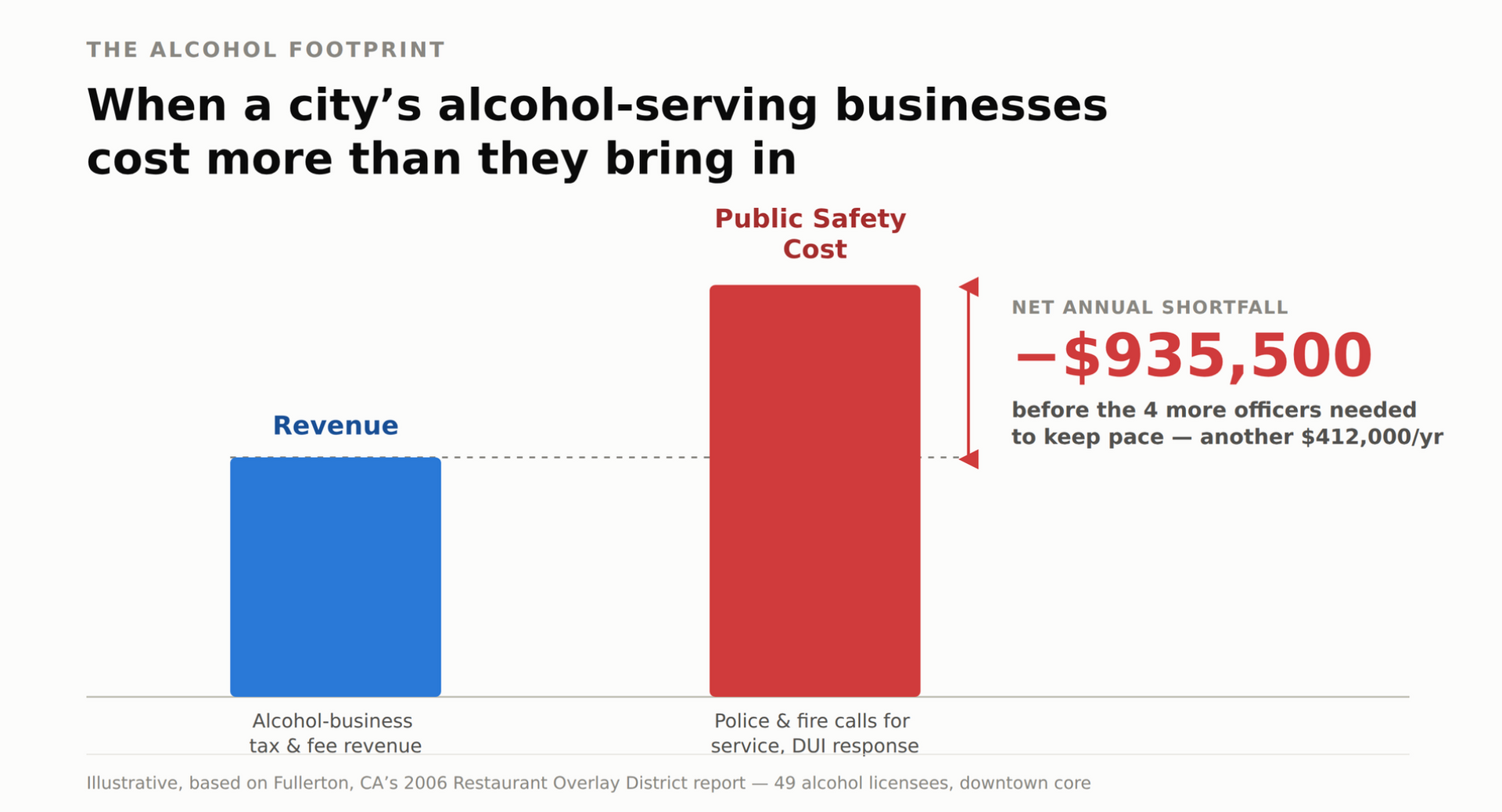
In our last blog, we shared Myth #1 behind your city’s million-dollar alcohol footprint: most city leaders mistakenly believe their city’s on-sale alcohol businesses are a net financial positive.
In this blog, you'll learn the second reason cities incur an alcohol footprint: a misconception of what the ABC can and cannot do.
Myth #2: The State Already Handles This
It's a mistaken belief that California's Department of Alcoholic Beverage Control (ABC) effectively conditions new licensees to ensure alcohol is sold responsibly.
It doesn't.
But not for lack of trying. State liquor law limits what conditions ABC is allowed to impose on a new license. Only the city can impose the conditions that are most effective in reducing alcohol-related harm and calls for service. And do so in a more engaging process.
A Reality-Based Path Forward
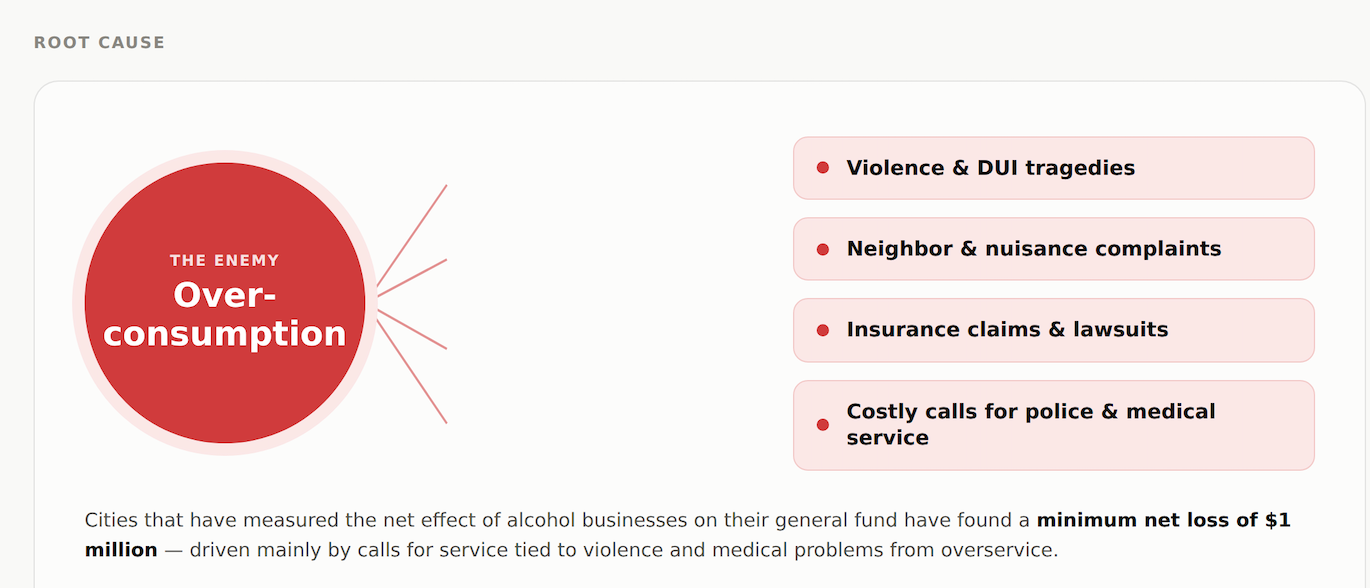
Once a city accepts that it owns the performance of its bars, restaurants, and nightclubs, the next step is to identify what causes most of the calls for service and DUI tragedies triggered by customers leaving its alcohol businesses.
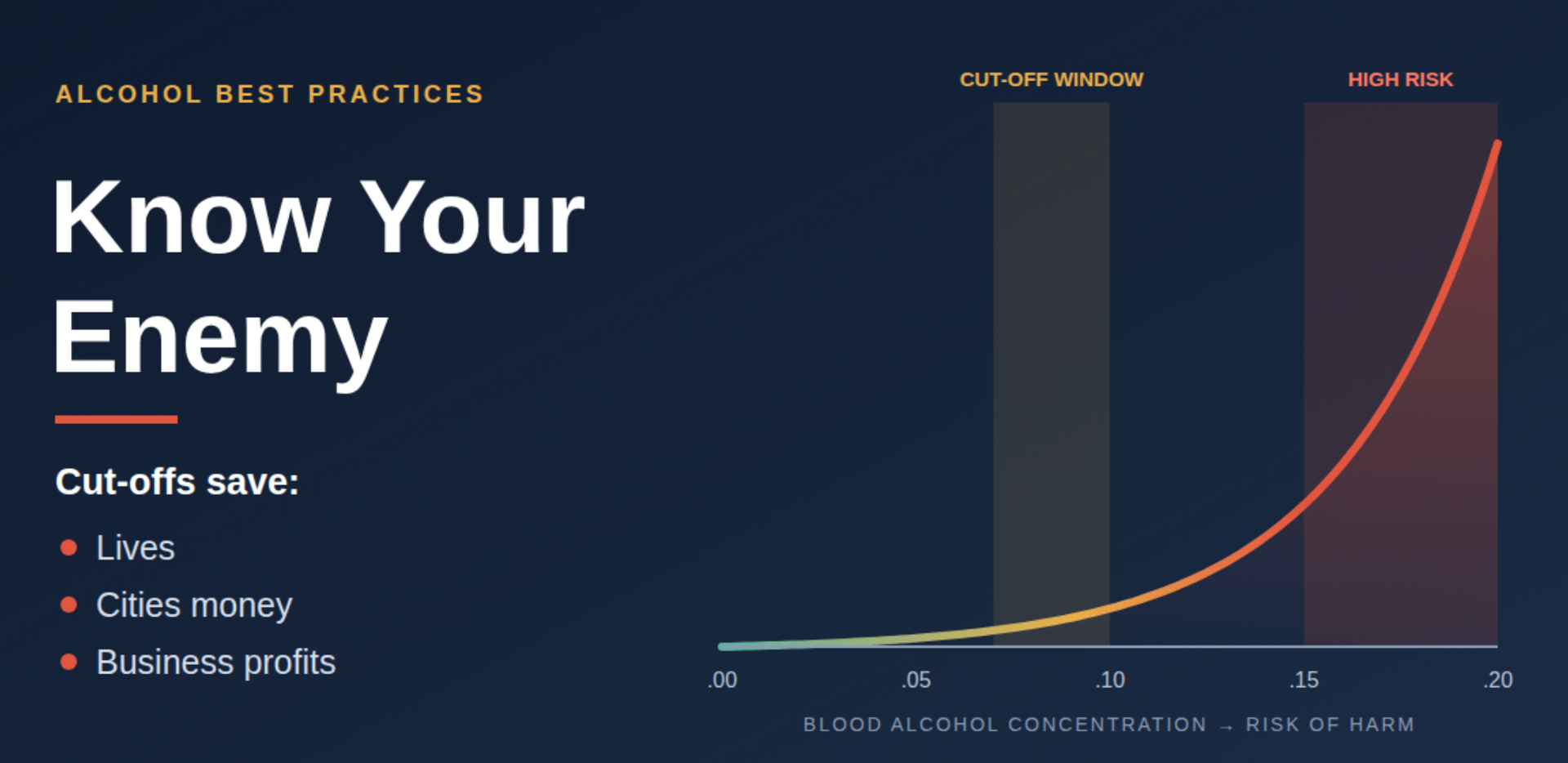
The primary culprit is the illegal overservice of alcohol. That reality is echoed by law enforcement, insurance brokers, hospitality industry professionals, and researchers.
Studies have found a strong positive relationship between patrons’ level of intoxication and the severity of aggression in bars (Graham et al.).
Researchers have found that for every $1 a city spends on enforcement efforts to reduce overservice of intoxicated patrons, it saves $260 in alcohol-related costs (Levy & Miller).
A city redesigning its conditional use permit process should ensure that at every step—what's said in conversation and written in conditions—the focus stays on practices that prevent the illegal overservice of alcohol. We provide talking points for every communication between the city and applicant/approved business and effective conditions of approval, including:
1. Application
2. Conditions of approval
3. Condition review meeting (if one is held)
4. Planning commission hearing
5. Pre-opening engagement
6. Enhanced bar checks
7. Post-opening meeting
Law and code enforcement play critical roles in both pre-opening and post-opening engagement with the new operator, ensuring the agreed-upon conditions are imprinted into the business's daily practices.
Those same practices that reduce calls for service and protect public safety also tend to make the businesses more profitable. We can prove it to you.
We hope you can join us for our upcoming workshop on Conditional Use Permits, Entertainment Permits, and On-Sale Alcohol Oversight on October 28, 2026. We'd love to help your city pave a new path forward to improve public safety and protect city resources.
WORKSHOP
Conditional Use Permits, Entertainment Permits, and On-Sale Alcohol Oversight
📅 Date: Wednesday, October 28, 2026
🕐 Time: 10:00 a.m. – Noon PDT (2 hours)
📍 Location: Live via Zoom (link emailed upon registration)
✅ Certifications: POST certification pending | APA certified, 2.0 CM
COST
- $330 per attendee
- $990 flat rate per city (up to 10 attendees)
WHO SHOULD ATTEND
This workshop is designed for professionals responsible for reviewing, approving, or monitoring alcohol licenses, including:
• City planning officials
• Law enforcement personnel
• Code enforcement officers
• Planning commissioners
Everyone involved in approving, conditioning, or onboarding new ABC on-sale licensed businesses must deliver a consistent, informed message at every step of the process. This workshop ensures they can.
We offer a significantly reduced group rate because the gains from this workshop grow exponentially when every department is trained together.