Know Your Enemy: The Overconsumption of Alcohol
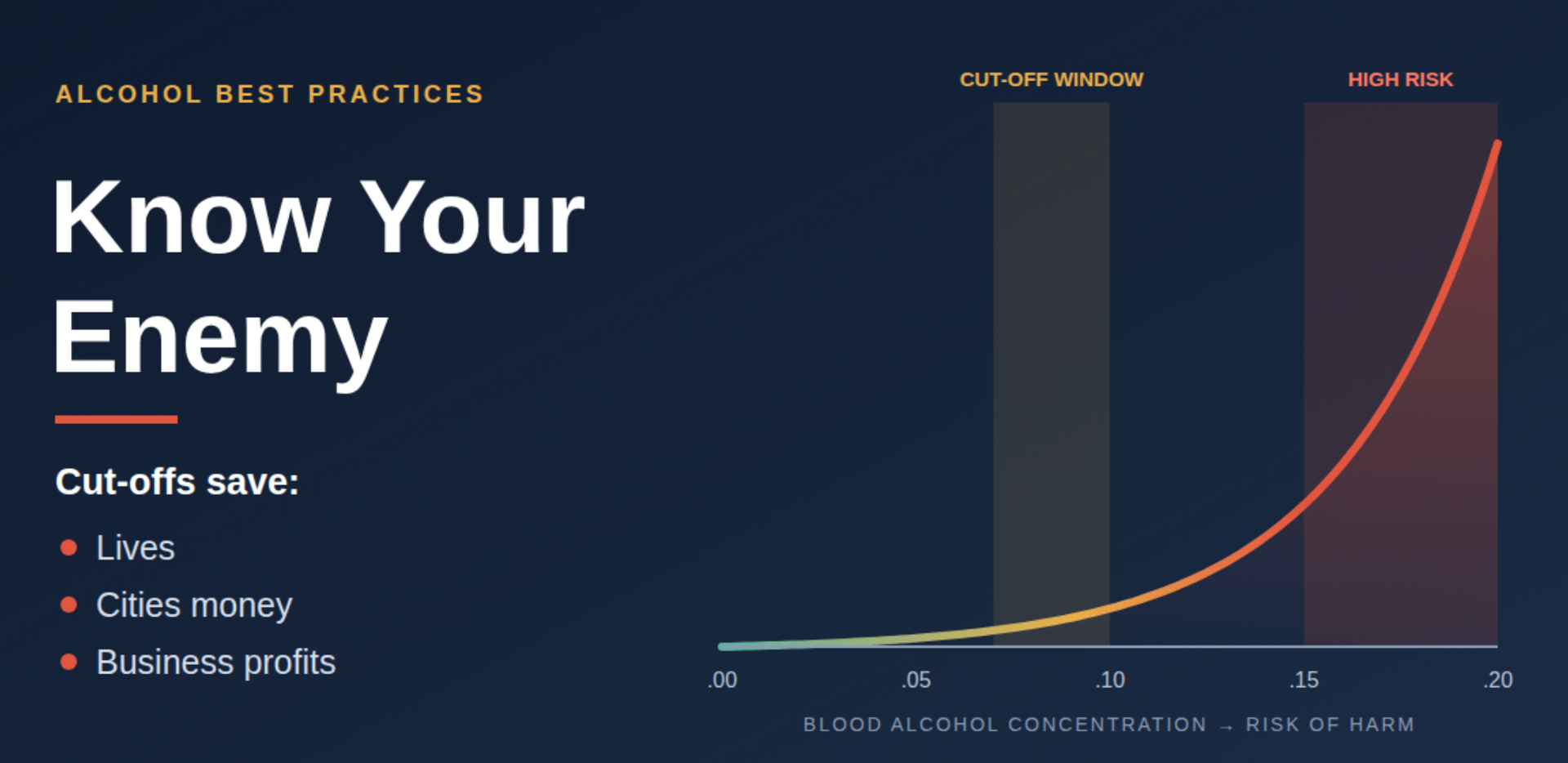
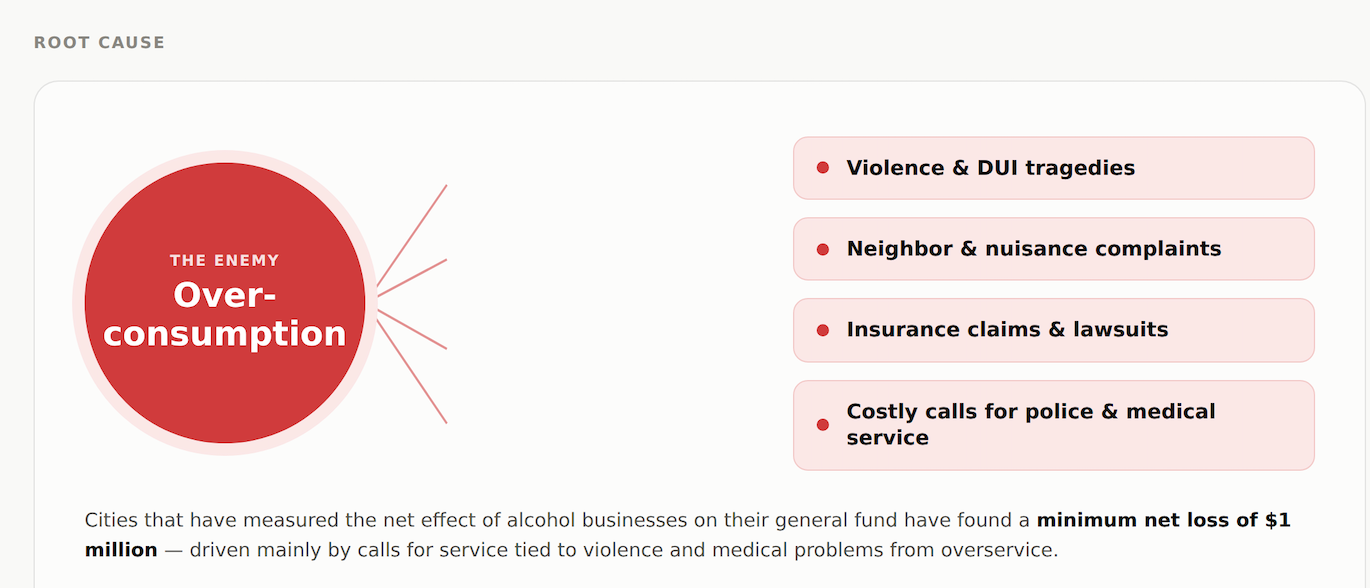
In our last blog we discussed how the overconsumption of alcohol is the enemy, not the moderate consumption of alcohol.
Moderate Drinkers are Safer
Multiple research studies have shown that people who consume alcohol and keep their BAC to below .06% are safer.
“There is agreement in the scientific community about what defines ‘moderate drinking.’ Also, moderate drinking means limiting how fast you drink and, as a result, keeping your blood alcohol concentration (BAC) below .055.” (Source: Hester)
In general, those who drink excessively are more aggressive and also get injured more seriously than those who drink moderately or not at all. Moderate drinkers do not appear to be at significantly higher risk of injury than nondrinkers. (Source: Scott and Dedel)
The Higher the BAC, the Greater the Risk of Harm
Alcohol follows a dose-response curve—higher BAC leads to higher risk across all major harms, including crashes, injuries, and violence.
Harm rises exponentially as demonstrated by this chart from National Highway Traffic Safety Administration on the risk of crashing at given BAC levels.
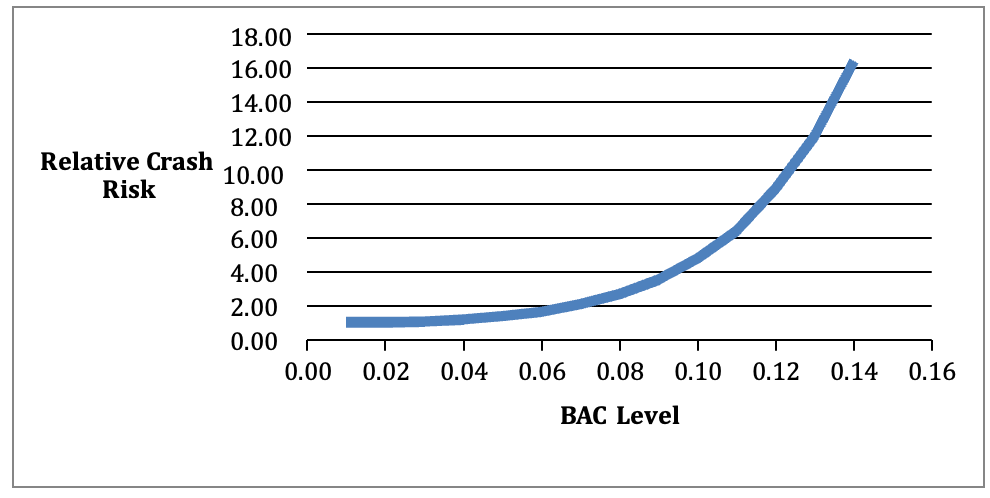
Any chart that depicts relative risk compares the risks of an exposed group against an unexposed group. In the chart, the unexposed group are those who haven’t consumed alcohol. The exposed group are drivers who consumed alcohol. The risk of the unexposed group is always pegged at 1 (even sober people crash). The chart shows the increasing risk of crashing as intoxication increases. Higher levels of intoxication result in an exponentially higher risk of crashing.
Research by Zador suggests in roughly 70% of DUI tragedies that result in death, at least one driver’s BAC was .15% or higher.
In California it is illegal for servers to sell alcohol to a customer who is obviously intoxicated. A person is obviously intoxicated when the average person can plainly see that the person is intoxicated. In other words, the person looks or acts drunk. Some of the signs of intoxication are being overly friendly, using foul language, argumentative, belligerent, slurred speech, slow, deliberate movements, swaying, drowsy, stumbling, red, watery eyes, or alcoholic breath.
BAC tables routinely indicate obviously intoxicated behavior typically occurs at around .07% to .10% — a person’s tolerance is a big factor.
When staff cut off obviously intoxicated customers, they prevent the customers from reaching high-risk intoxication (BAC .15% and higher) where harm is significantly more likely to occur. Cutting off customers saves lives.
Maybe the Most Important Point That I’ll Ever Make in a Blog
There are numerous ways planners and law enforcement can reduce overconsumption in newly approved on-sale alcohol businesses.
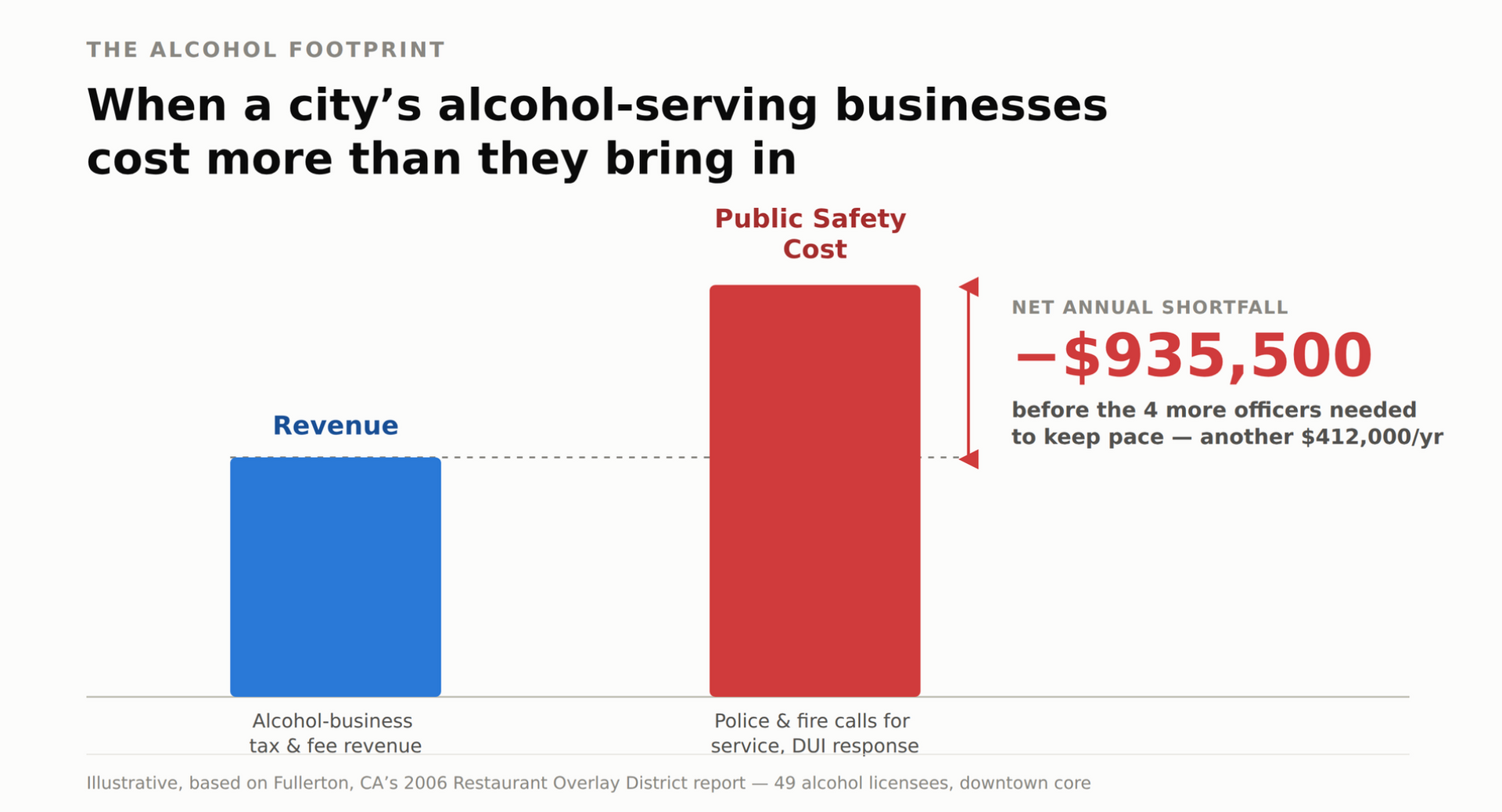
By significantly reducing the number of obviously intoxicated customers who are illegally served more alcohol, cities will:
· Save money from fewer calls for service
· Save lives and reduce injuries (it’s not hyperbole; it’s math)
· Save businesses money by reducing costly lawsuits and customer churn (turnover)
A Message to APA California Conference Attendees!
We hope you find the sessions stimulating and the time enjoyable. Of course, if you find the need to discuss our upcoming workshop at the conference, we understand your excitement.
WORKSHOP
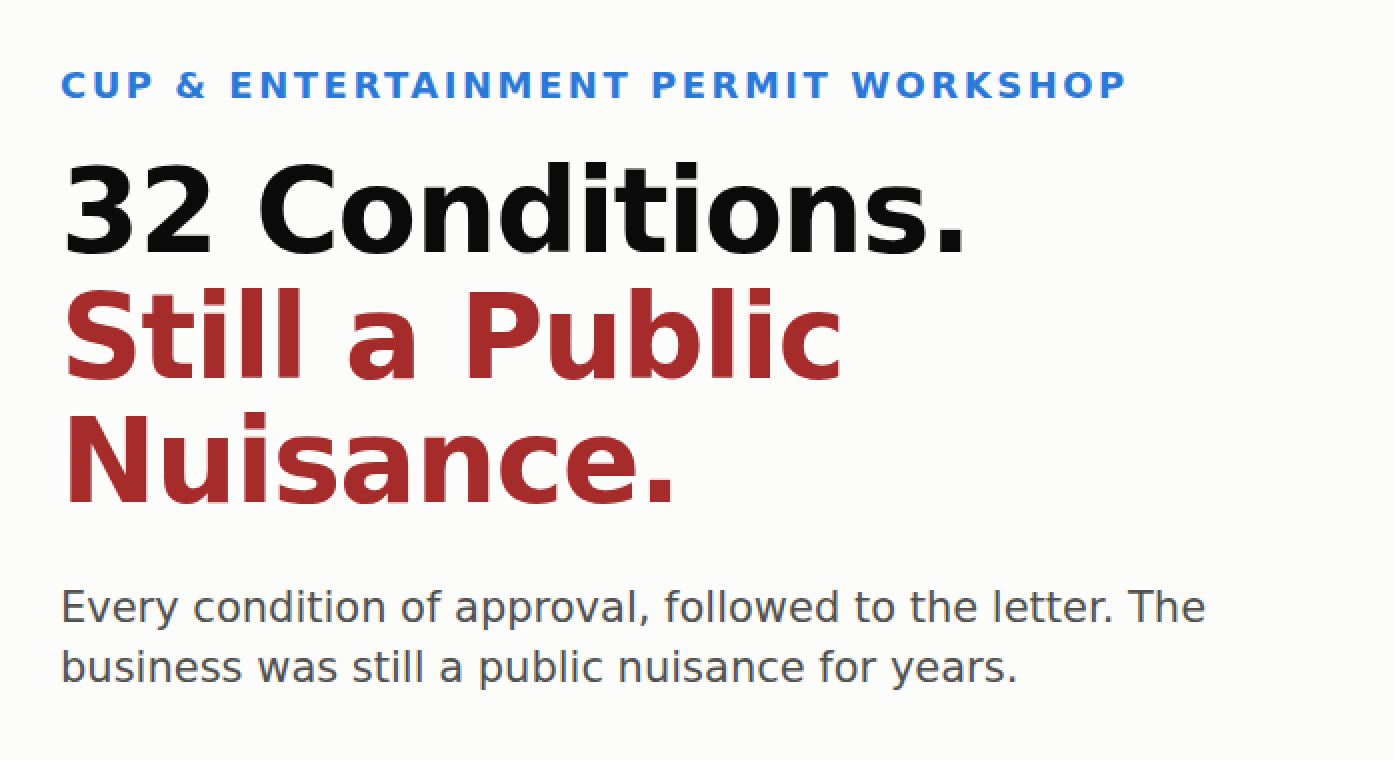
Conditional Use Permits, Entertainment Permits,
and On-Sale Alcohol Oversight
📅 Date: Wednesday, October 28, 2026
🕐 Time: 10:00 a.m. – Noon PDT (2 hours)
📍 Location: Live via Zoom (link emailed upon registration)
✅ Certifications: POST certification pending | APA certified, CM 2.0
Cost
- $330 per attendee
- $990 flat rate per city (up to 10 attendees)
REGISTER NOW
LEARN MORE
WHO SHOULD ATTEND
This workshop is designed for professionals responsible for reviewing, approving, or monitoring alcohol licenses, including:
• City planning officials
• Law enforcement personnel
• Code enforcement officers
• Planning commissioners
Everyone involved in approving, conditioning, or onboarding new ABC on-sale licensed businesses must deliver a consistent, informed message at every step of the process. This workshop ensures that they can.
We offer a significantly reduced group rate because the gains compound when every department is trained together.
REGISTER NOW
LEARN MORE