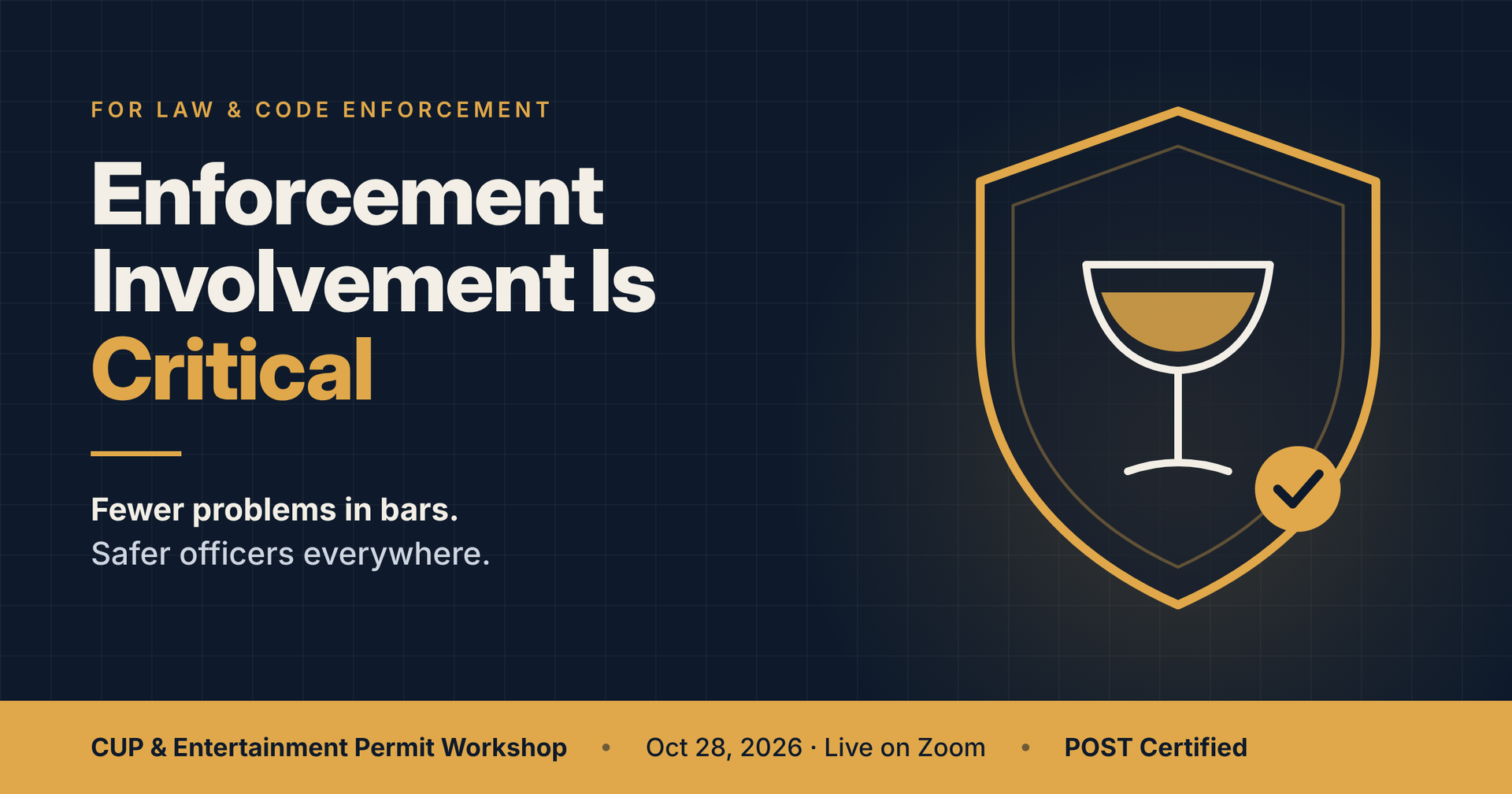
Enforcement Involvement is Critical
Good News: POST Certification Approval
A few days ago, our law enforcement consultant at the Commission of Peace Officer Standards and Training (POST) advised that he is going to approve our upcoming course:
"Conditional Use Permits, Entertainment Permits, and On-Sale Alcohol Oversight"
We've also sent the course to the California Association of Code Enforcement Officers (CACEO), and we're hopeful they approve it, too.
All that makes this a good moment to explain why we strongly encourage law enforcement and code enforcement personnel to attend—and why their participation matters:
1. Different Cities, Different Approaches
Every city handles approvals for new on-sale businesses a little differently. In most jurisdictions, law enforcement weighs in on whether a business should be approved and what conditions are imposed.
Many cities rely heavily on law enforcement input.
This workshop helps ground law enforcement recommendations in proven, outcome-based practices—not just precedent.
2. Conditions That Actually Work
The workshop introduces new, practical conditions of approval drawn from research and real-world application.
When officers understand why a condition matters, they're more likely to ensure it's followed.
Most of the conditions we recommend in the workshop read as common sense the minute you see them.
3. Better Conversations with Operators
The workshop recommends structured meetings between law enforcement and operators, and provides officers with clear talking points for the meetings.
These meetings align messaging across planners, commissioners, and enforcement, so operators hear one consistent message from your city.
4. Direct Application to Entertainment Permits
Officers often takes the lead on entertainment permits.
The strategies and conditions covered in the workshop help prevent problems before they start.
5. Enhanced Bar Checks
Workshop participants learn how to conduct Enhanced Bar Checks. Done right, they can reduce overconsumption in both new and established businesses.
6. Understanding the Business Operator Mindset
During years of involvement with DUI task forces in Orange County, I heard the same frustration again and again: why do business operators make the decisions they do?
As a former general manager of restaurants, I can tell you that the problem is a lack of clear, practical best practices—on both sides:
Operators often don’t know what best operating practices look like, because:
- Responsible beverage service courses teach laws and serving techniques; not alcohol management practices.
- The research that underpins best practices for alcohol management has no pathway to the operators who would benefit from it.
- Schools that offer hospitality degree courses are largely unaware of the alcohol-management research that could inform their curriculum.
- A bar can meet all conditions in its conditional use permit and still be a disorderly house. The behaviors that make it a disorderly house also make it less profitable, all due to the lack of best operating practices.
Cities often don’t impose conditions that require operators to develop best operating practices.
That gap leads to poor outcomes—for the business and for the city.
7. Most Important: Officer Safety
As you well know, every call for service carries risk, and many of those calls involve alcohol-related violence.
When cities shape how alcohol is managed inside a business, they can reduce both the number and the severity of those calls.
Fewer problems in the bar. Safer officers everywhere.
UPCOMING WORKSHOP
Conditional Use Permits, Entertainment Permits,
and On-Sale Alcohol Oversight
📅 Date: Wednesday, October 28, 2026
🕐 Time: 10:00 a.m. – Noon PDT (2 hours)
📍 Location: Live via Zoom (link emailed upon registration)
✅ Certifications:
- Commission on Peace Officer Standards and Training (POST)
- American Planning Association (APA) 2.0 CM
- California Association of Code Enforcement Officers (CACEO) (application pending)
Cost:
- $330 per attendee
- $990 flat rate per city (up to 10 attendees)
WHO SHOULD ATTEND
This workshop is designed for professionals responsible for reviewing, approving, or monitoring on-sale alcohol licenses, including:
• City planning officials
• Law enforcement personnel
• Code enforcement officers
• Planning commissioners
Everyone involved in approving, conditioning, or onboarding new on-sale licensed businesses must deliver a consistent, informed message at every step of the process. This workshop ensures they can.
We offer a significantly reduced group rate because the gains compound when every department is trained together.