“Not a Public Hearing!”
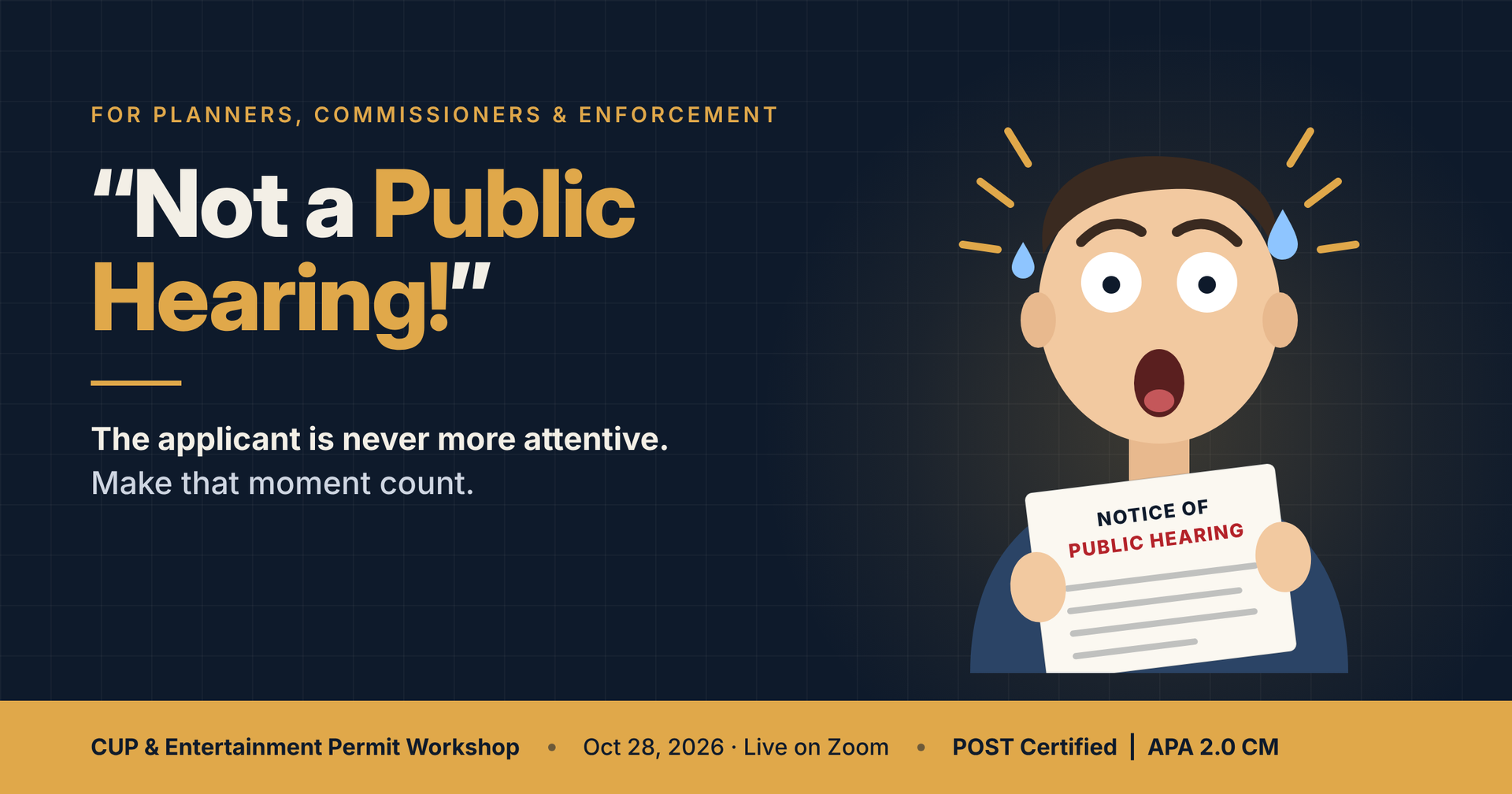
That was the reaction from my brothers and me—both times our Conditional Use Permit for alcohol sales went before the planning commission.
It’s the same reaction we've heard from clients we helped through the CUP process. For an applicant, few moments feel like higher stakes than standing before the planning commission.
That's exactly what makes the public hearing such an opportunity.
First, a Word of Respect
I’ve always been impressed by the effort planning commissioners put into these decisions. Most are modestly compensated public servants who take the responsibility seriously and are clearly motivated by a genuine desire to serve their communities.
Thank you.
Why the Hearing Matters Most
At the hearing, the applicant understands two things very clearly:
- The commissioners decide whether the business gets approved.
- If problems arise later, those same commissioners may decide its fate.
That gives the commission the applicant’s full attention—a rare chance to set expectations before the business' doors ever open.
What’s Usually Missing
Commissioners already do what they do well: asking whether the business is a good fit for the community.
What’s often missing—at the hearing and throughout the entire approval process—is a clear, consistent message about what actually drives outcomes once the establishment's doors open.
That message should start with the application and carry through every touchpoint:
- The CUP application
- Meetings with planning staff
- The conditions of approval
- The public hearing
- Law enforcement operator meetings and bar checks
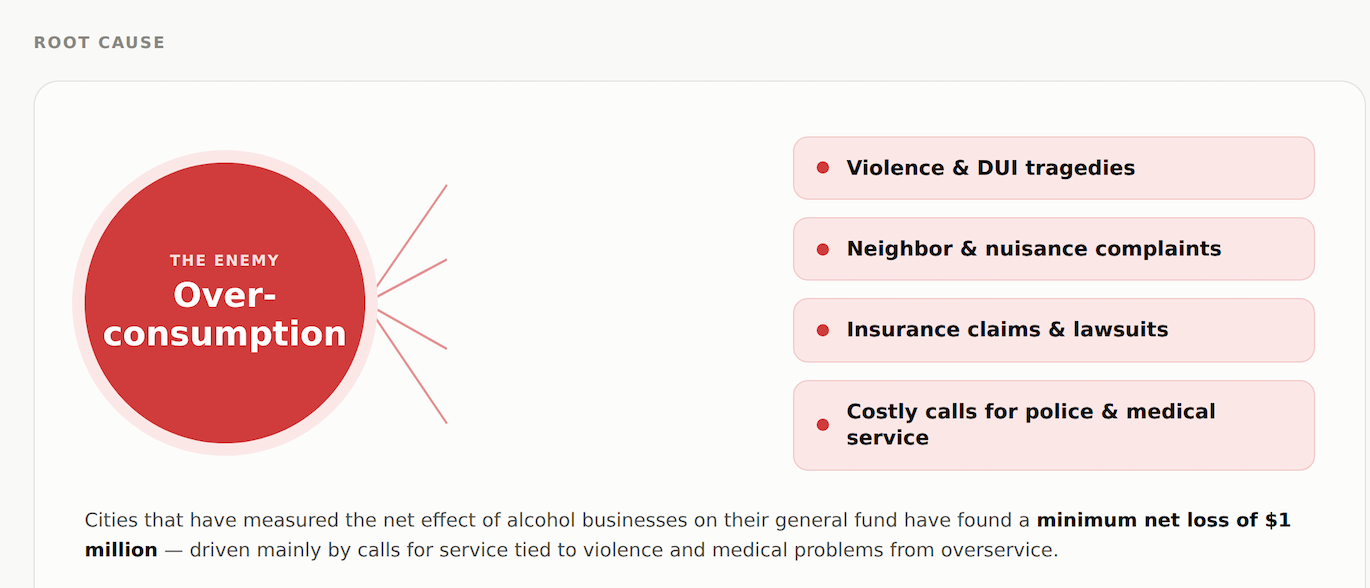
Instead, applicants hear plenty about parking, noise, signage, trash enclosures, patios, and landscaping—legitimate concerns, but none of them reduce violence or calls for service. What does—how alcohol is served and managed inside the business—rarely comes up at all.
Consistency Changes Outcomes
Control freaks? Maybe. But we’ve learned this:
When the message is consistent—and reinforced in every communication, every condition, and every enforcement contact—problems drop.
Turning the Hearing into a Moment That Matters
In our workshop, we provide documented talking points for every touchpoint with the applicant or operator—including clear, practical questions and comments that commissioners can use at the hearing.
Together, they communicate in no uncertain terms:
If approved, here’s what it will take to stay in good standing.
The applicant leaves the hearing knowing exactly how to:
- Prevent problems before they start
- Avoid being called back before the commission
- Protect their business—and their approval
WORKSHOP
Conditional Use Permits, Entertainment Permits,
and On-Sale Alcohol Oversight
📅 Date: Wednesday, October 28, 2026
🕐 Time: 10:00 a.m. – Noon PDT (2 hours)
📍 Location: Live via Zoom (link emailed upon registration)
✅ Certifications: POST certified | APA certified, 2.0 CM
Cost
- $330 per attendee
- $990 flat rate per city (up to 10 attendees)
WHO SHOULD ATTEND
This workshop is designed for professionals responsible for reviewing, approving, or monitoring alcohol licenses, including:
- City planning officials
- Law enforcement personnel
- Code enforcement officers
- Planning commissioners
Everyone involved in approving, conditioning, or onboarding new ABC on-sale licensed businesses must deliver a consistent, informed message at every step of the process. This workshop ensures they can.
We offer a significantly reduced group rate because the gains compound when every department is trained together.